EU’s Balancing Act with Trump: A Year In Review
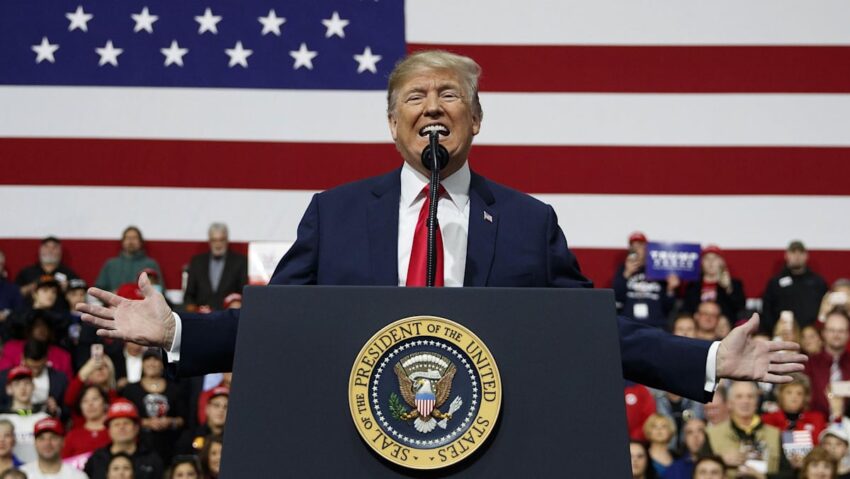
As Donald Trump marks over a year in the White House, the European Union faces the complex challenge of balancing its economic interests with the need to maintain a strong relationship with the United States. This relationship is crucial for the EU’s security, yet navigating Trump’s unpredictable policy changes has left EU leaders uneasy. The Dutch foreign affairs minister recently admitted that no one in Europe seems to have a foolproof strategy for dealing with the US president. His statement came amidst fresh threats of tariffs from Trump over ongoing tensions regarding Greenland, which led to a surprising display of deference from former Dutch Prime Minister Mark Rutte, who referred to Trump affectionately as “Daddy” at a summit in Davos.
In light of these challenges, the EU is striving to charm Washington while trying to safeguard its geopolitical credibility. However, whether this approach signifies genuine collaboration or merely cautious appeasement remains to be seen. Here are five notable strategies the EU has adopted in response to Trump’s agenda.
1. Trump’s Immigration Agenda Reshapes EU Policy
One of Trump’s significant priorities has been immigration, labeling it as a threat to Western civilization. His administration has funneled millions into the US Immigration and Customs Enforcement (ICE), a force that has instilled fear among many communities. This approach resonated with Trump during his recent remarks at the Davos summit, where he emphasized that uncontrolled migration was a core issue facing Europe. Critics have noted that while EU leaders may not publicly endorse Trump’s narrative, their migration policies increasingly reflect a similar perspective, treating migrants as potential threats rather than individuals seeking refuge.
The European Commission is responding with a new five-year migration strategy that drastically aligns with Trump’s rhetoric. This plan will complicate the asylum process, placing additional hurdles for those seeking a new life in Europe. Magnus Brunner, the EU’s migration commissioner, acknowledged the strain that recent influxes have put on the continent, stating, “In the past decade, we’ve accepted significant responsibility, but we lacked control and rules. Regaining that control is our priority now.”
2. EU’s Silence on Recent Violence in the US
The recent shooting of US citizen Alex Pretti in Minnesota has highlighted a shift in the EU’s stance on domestic violence issues in the United States. Unlike the strong condemnation offered after the death of George Floyd, the European Commission refrained from making any firm statements regarding Pretti’s killing, instead framing it as an internal US matter. This marks a notable shift in tone and approach compared to previous incidents where the EU was outspoken against violence.
When questioned about their lack of condemnation, a spokesperson from the Commission offered a vague response, underlining a reluctance to engage with the issue directly. This reticence to address the incident may reflect the EU’s broader strategy of appeasing the current US administration, choosing to avoid potential tensions that could arise from criticizing its approach to domestic issues.
3. Rutte’s Role in the Greenland Controversy
At the heart of the Greenland discussions is Mark Rutte, the former Dutch Prime Minister and current NATO leader, who has emerged as a crucial figure in managing relations with Trump. Ahead of a pivotal EU leaders’ summit, Rutte reportedly brokered a verbal agreement with Trump concerning Arctic security and trade negotiations over Greenland. This unexpected collaboration has raised eyebrows among EU officials and observers, with some characterizing it as a strategy of appeasement.
Despite the lack of detailed information about the arrangements, Rutte has publicly supported Trump’s aggressive stance on Arctic security, reiterating that the US president is justified in asserting issues of geopolitical significance. The EU Commission’s initial struggles to clarify its stance on Greenland suggest an ongoing uncertainty about its diplomatic position as it grapples with Trump’s demands.
4. Acceptance of Trump’s ‘Board of Peace’ Initiative
At Davos, Trump introduced his concept of a ‘Board of Peace,’ which has become a point of contention. While many European representatives, particularly from France and Germany, have declined participation due to legal concerns, EU institutions appear open to joining, provided the initiative aligns with United Nations mandates. This willingness indicates the EU’s tentative approach to engaging with Trump’s administration in a structured manner.
The UN Security Council has approved the board for the Gaza conflict, set to expire in 2027. Following recent discussions, António Costa, the EU Council President, expressed readiness to collaborate on the Gaza Peace Plan, demonstrating the EU’s desire to maintain a working relationship with the US despite the board’s controversial framework.
5. EU’s Technological Regulatory Push in the Face of US Opposition
The EU has ramped up its efforts to regulate big tech companies, spearheaded by the Digital Markets Act and the Digital Services Act. These measures aim to bolster the EU’s technological capabilities and counteract perceived US dominance in the sector. The US government, however, has strongly criticized these regulations, arguing they create an uneven playing field.
Amidst this pushback, the EU is adapting its digital regulations, aiming to align them with the needs of small tech firms within the bloc while simultaneously facing pressure from major US tech companies. NGOs have raised concerns about the legislation being swayed by lobbying from these firms, indicating the complexities and challenges the EU confronts as it seeks to assert its regulatory authority in an increasingly polarized tech landscape.
Unlock the power of effortless content creation with Autowp, your ultimate AI content generator and AI content creator plugin for WordPress. Designed to enhance your website’s engagement, Autowp harnesses advanced artificial intelligence to generate high-quality, SEO-optimized articles and blog posts in seconds. Say goodbye to writer’s block and hello to a streamlined content strategy that keeps your audience coming back for more. Transform your WordPress experience today! To remove this promotional paragraph, upgrade to Autowp Premium membership.