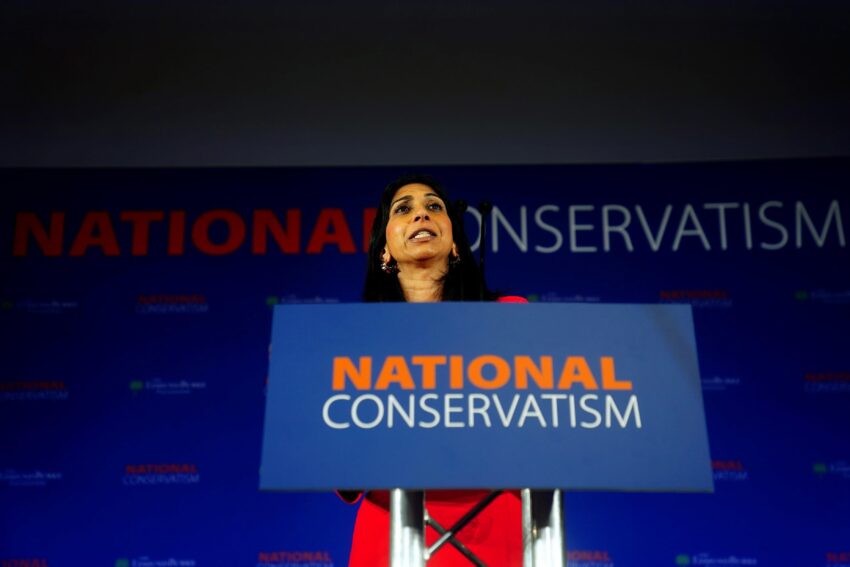
National Conservatism: Understanding Its Emergence and Significance
In a recent episode of the European Council on Foreign Relations (ECFR)’s summer mini-series on the ‘New Right’, host Mark Leonard engages with Yoram Hazony, a prominent Israeli political scientist and the president of the Herzl Institute in Jerusalem. The discussion revolves around national conservatism, which many believe is a significant response to the current challenges facing liberalism. Hazony, who also chairs the Edmund Burke Foundation, provides insights into how national conservatism is not just a political stance but a broader ideology that seeks to address the disillusionment many feel towards liberal democratic values.
During their conversation, Leonard and Hazony delve into national conservatism’s historical roots, tracing its development in the context of nationalism’s evolving role in modern politics. They also tackle the generational shifts reshaping political ideologies in present times. As liberalism faces scrutiny and reevaluation, questions arise about the future of political frameworks: What are the new paradigms that might emerge from this perceived crisis? Will nationalism play a pivotal role in redefining democratic discourse?
Historical Context and Modern Political Implications
Exploring the historical backdrop of nationalism, Leonard and Hazony emphasize how past events have sculpted contemporary political landscapes. They point out that the rise of national conservatism can be seen as a direct reaction to the perceived failures of liberalism, particularly during moments of crisis. This perspective invites listeners to consider nationalism not only as a political tool but as a potential force for unity and identity within diverse societies.
As the conversation progresses, Hazony argues that the generational shift in political thought is essential to understanding today’s dynamics. Younger voters are increasingly disenchanted with established liberal frameworks, which prompts a search for alternative ideologies. The discussion raises critical questions regarding the adaptability of political theory in a rapidly changing global environment, particularly regarding how these new ideologies can intersect with traditional democratic values.
The Future of Democratic Discourse and Nationalism
One of the crucial points made by Hazony is the potential for nationalism to transform democratic discourse significantly. He posits that as populations seek greater national identity and cohesion, there is an opportunity for nationalists to reshape the way democracy is perceived and practiced. The trend suggests a move away from global liberalism towards more localized and nationalistic frameworks that might resonate better with voters seeking security and belonging.
In this context, both Leonard and Hazony contemplate the implications of these trends for the future of political engagement. The discussions invoke thoughts about the role of nationalism in fostering political stability and unity amidst a fragmented landscape. As the episode concludes, listeners are left pondering whether national conservatism represents a fleeting response or a foundational shift in how democracies might evolve in the coming years.
Literature on National Conservatism
In conjunction with their conversation, the hosts recommend several pertinent readings that provide deeper insights into national conservatism and its critiques. Among these is Richard Legutko’s *The Demon in Democracy: Totalitarian Temptations in Free Societies*, which examines the dangers lurking within seemingly free regimes. Patrick J. Deneen’s *Why Liberalism Failed* also offers a critical assessment of liberalism’s shortcomings, posing challenging questions about its viability.
Furthermore, Rusty Reno’s *Return of the Strong Gods: Nationalism, Populism, and the Future of the West* is highlighted as an essential resource for understanding the intersection of nationalism and contemporary political challenges. These works collectively contribute to the ongoing dialogue about the evolving nature of political ideologies and the conditions under which they prosper.
Stay Informed and Engaged
Listeners and readers are encouraged to subscribe to ECFR’s newsletters, which provide updates on recent publications, podcasts, events, and career opportunities. Staying connected with this community allows individuals to engage with the evolving discourse surrounding national conservatism and its implications for future political landscapes.
In a world that is frequently shifting ideologies, such engagement is vital for understanding the nuanced developments in global politics. As national conservatism gains momentum, keeping abreast of these discussions becomes critical for scholars, policymakers, and the public alike.